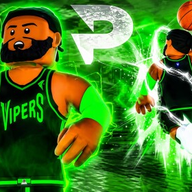
Practical Basketball How to Dribble: The Ultimate Guide to Mastering Ball Handling
Learn Practical Basketball how to dribble with our comprehensive guide. Master animations, escape moves, and real-life fundamentals to dominate the court.
Mastering the court requires more than just a high-percentage jump shot; you need to understand the intricate mechanics of Practical Basketball how to dribble to create necessary separation. Whether you are navigating the virtual stress tests of the latest build or hitting the local gym for a pickup game, learning Practical Basketball how to dribble effectively is the primary difference between a costly turnover and a highlight-reel finish.
In this guide, we will break down the essential animations, controller inputs, and fundamental philosophies required to elevate your ball-handling skills. From the "DBook" crossover to the legendary Maravich drills, this is your roadmap to becoming an elite playmaker.
Essential Animations for Practical Basketball
In the digital arena, your success is often dictated by the animations you equip. Player experience suggests that certain moves are "glitchy" or harder to block, giving you a competitive edge. According to community reports from high-streak players, the following animations are currently considered the "meta" for a 6'5" Small Forward build.
Top-Tier Animation Loadout
When learning Practical Basketball how to dribble, animation selection should be based on your build's height and ball-handling stats. For instance, players over 6'8" cannot access Breakdown 3 and should instead opt for Breakdown 2 to maintain effectiveness on the perimeter.
Understanding the Control Mechanics
The most critical distinction to make when learning Practical Basketball how to dribble is the difference between "Standing" moves and "Escape" moves. These are toggled by your use of the sprint button.
- Standing Moves: These occur when you are NOT holding the sprint button. They are essential for reading the defense and baiting your opponent into over-committing.
- Escape Moves: These occur while you ARE holding the sprint button. These moves generally drag your player further across the court, creating significant space for a shot or a drive.
Dribble Input Reference Table
Player experience indicates that using a specialized controller, such as the Razer Wolverine V2, can make these D-pad inputs more fluid, though standard controllers are perfectly viable with practice.
Advanced Dribble Techniques and Speed Boosts
To truly excel at Practical Basketball how to dribble, you must master speed boosts. These are specific sequences that allow your player to accelerate faster than a standard run.
The Breakdown Speed Boost
The breakdown is not just for show. By initiating a breakdown (like the Zachary Mayback Jr. animation) and immediately transitioning into a drive, you catch defenders off guard. Community reports highlight that the "Dry Hesitation" (equipped to the escape slot) is particularly glitchy, allowing for rapid changes in direction that are difficult to track.
The Half Spin and Sham God
- Half Spin: Click up on the D-pad once while moving. This is a reliable speed boost that works regardless of which hand the ball is in.
- Sham God: Double-tap up on the D-pad. While this move is visually impressive, player experience warns that you can be "bumped" out of the animation easily. It is best used when you have a clear path or significant space from your defender.
The Horizontal Crossover
If you equip Crossover 3 for your horizontal escape, you can trigger a wide "Loom" crossover. To do this, hold sprint and move your left stick directly left or right while performing the crossover. This move is specifically designed to punish defenders who are playing "high" on the three-point line.
Real-World Fundamentals: The Foundation of Ball Handling
While digital mechanics are specific, the philosophy of Practical Basketball how to dribble is rooted in real-world fundamentals. Professional coaching tips emphasize that dribbling is a solo skill, but ball handling is a game-wide IQ.
9 Tips for Elite Ball Handling
- Dribble Hard: The harder the ball hits the floor, the faster it returns to your hand, giving you more control.
- Head Up: Never look at the ball. Survey the rim and the defense at all times.
- Fingertip Control: Avoid using your palms; the fingertips provide the touch needed for quick changes.
- Imagination: Practice with a specific game scenario in mind.
- Mentality: Only put the ball on the floor if you have a purpose, such as getting to the layup.
- Length: Try to beat your defender with a single long dribble rather than multiple short ones.
- Angles: Move in straight lines (North-South) as much as possible to reach the basket efficiently.
- Efficiency: Don't use two dribbles for a task that only requires one.
- Comfort Zone: Practice at speeds that cause you to lose the ball; this is the only way to improve your ceiling.
The Maravich Drill Series
Named after Pete Maravich, these drills are essential for anyone serious about Practical Basketball how to dribble. They focus on "feeling" the ball without looking at it.
- Figure 8s: Dribble the ball in a figure-8 pattern through and around your legs.
- Spider Dribble: A rapid-fire drill involving two taps in front of the legs and two taps behind.
- Drop and Catch: Dropping the ball between your legs and switching hand positions before it hits the ground.
Finishing at the Rim: Gather Moves
Dribbling is only useful if it leads to a score. In Practical Basketball, how you gather the ball determines whether you get blocked or finish the play.
Gather Move Comparison
A "secret sauce" tip from the player community suggests that shooting with the Triangle (PS) or Y (Xbox) button may result in a slightly faster release than using the standard Square or X button, particularly during walk-back shots. While this is a matter of preference, many top-tier players utilize this to beat closing defenders.
IQ and Reading the Defense
The ultimate goal of learning Practical Basketball how to dribble is to react to the defense. You should not be "spamming" moves blindly. Instead, use standing moves to see how the defender reacts.
- If the defender plays high: Use a jab cross or a horizontal crossover to rim run.
- If the defender baits the paint: Use a standing dribble to make them drop back, then perform a walk-back into a three-pointer.
- Crabbing: If you get an "arm swipe" animation on your defender, you have successfully "crabbed" them. This puts the defender behind you, giving you a wide-open shot attempt.
Frequently Asked Questions
How can I improve my Practical Basketball how to dribble skills?
The best way to improve is to "lab" your moves in a practice facility. Focus on mastering one move at a time, such as the snatchback, before trying to chain them into combos. Additionally, practicing real-life drills like the Maravich Figure 8s can improve your overall hand-eye coordination.
What is the best build for dribbling in Practical Basketball?
Community reports suggest a 6'5" Small Forward build is optimal. This height allows you to maintain high speed while still accessing elite playmaking animations like Breakdown 3 (the DBook cross), which requires an 86 ball handle rating.
Why do I keep losing the ball when I dribble?
In the game, this often happens if you try to perform "Escape" moves too close to a defender, leading to a bump turnover. In real life, it usually stems from using your palms instead of your fingertips or not dribbling the ball hard enough to maintain control.
Is there a difference between dribbling and ball handling?
Yes. Dribbling is the mechanical skill of bouncing the ball. Ball handling is the tactical application of that skill, incorporating passing, decision-making, and court vision to advance the game.
Sources
Related Guides
Master Practical Basketball Dribble Combos: Best Animations, Settings, and Move Guide
Learn how to master Practical Basketball dribble combos with our complete guide to settings, signature animations, controller inputs, and speed boosts.
Mastering Practical Basketball Dribble Patterns: The Ultimate Guide to Dominating the Court
Learn how to optimize your Practical Basketball dribble patterns with expert tips, signature move breakdowns, and the best build settings for your PG.
Practical Basketball: How to Euro Step Like an Elite Finisher
Master the Euro step with our practical basketball guide. Learn the footwork, ball sweeps, and drills to beat defenders and finish at the rim.
The Ultimate Practical Basketball Best Dribbling Build for 2026
Master the court with the Practical Basketball best dribbling build. Get expert tips on attributes, badges, and animations to dominate your opponents.